Platform feature 2 of 6
Staff ordering
Waiters send orders straight to the kitchen and bar.
The problem
Handwritten order slips get lost, misread or never reach the bar — each mistake is lost revenue and an unhappy guest.
Our thinking
Waiters use a phone or tablet to add items to a table's tab. Each item routes automatically to the right station: food to the kitchen, drinks to the bar.
How it works
- Waiter picks a table and adds items with notes (no ice, well done).
- Kitchen and bar screens or printers receive only their items.
- Status moves from received to preparing to ready, so waiters know when to collect.
- Every item is logged against the waiter — no more unrecorded drinks.
Sample user journey
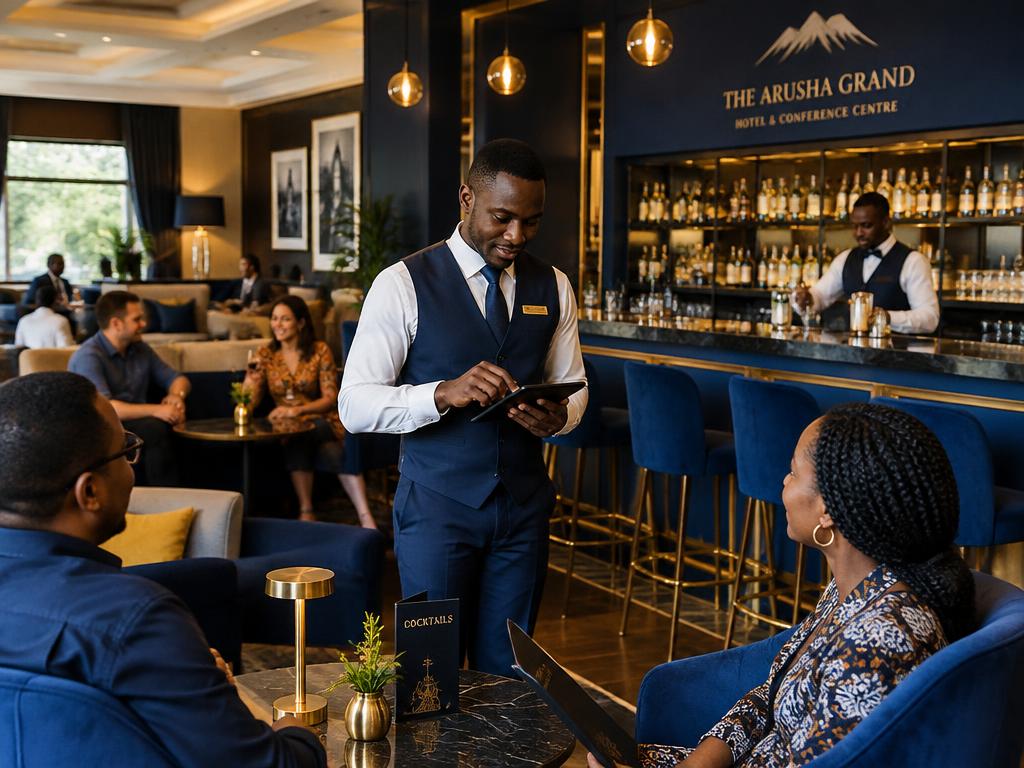
Baraka, a waiter at a busy hotel lounge in Arusha.
- 1
Take the order
A group of six orders at once; Baraka taps items on his tablet.
The thought: Speed at the table matters most during rush hour.
- 2
Route
Nyama choma goes to the kitchen, beers to the bar — automatically.
The thought: Remove the walk-and-shout step that causes mistakes.
- 3
Get notified
The bar marks the beers ready; Baraka's tablet buzzes.
The thought: Waiters should serve, not chase the kitchen.
- 4
Close cleanly
Every item is already on the tab when the group asks for the bill.
The thought: What is served is always billed — this plugs revenue leakage.
For the staff
Less running around, fewer disputes, clear record of their sales and tips.
For the venue
Stops leakage from unrecorded items and speeds up table turnover.
How TabTrack earns
Included in the subscription; drives the payment volume that earns transaction fees.